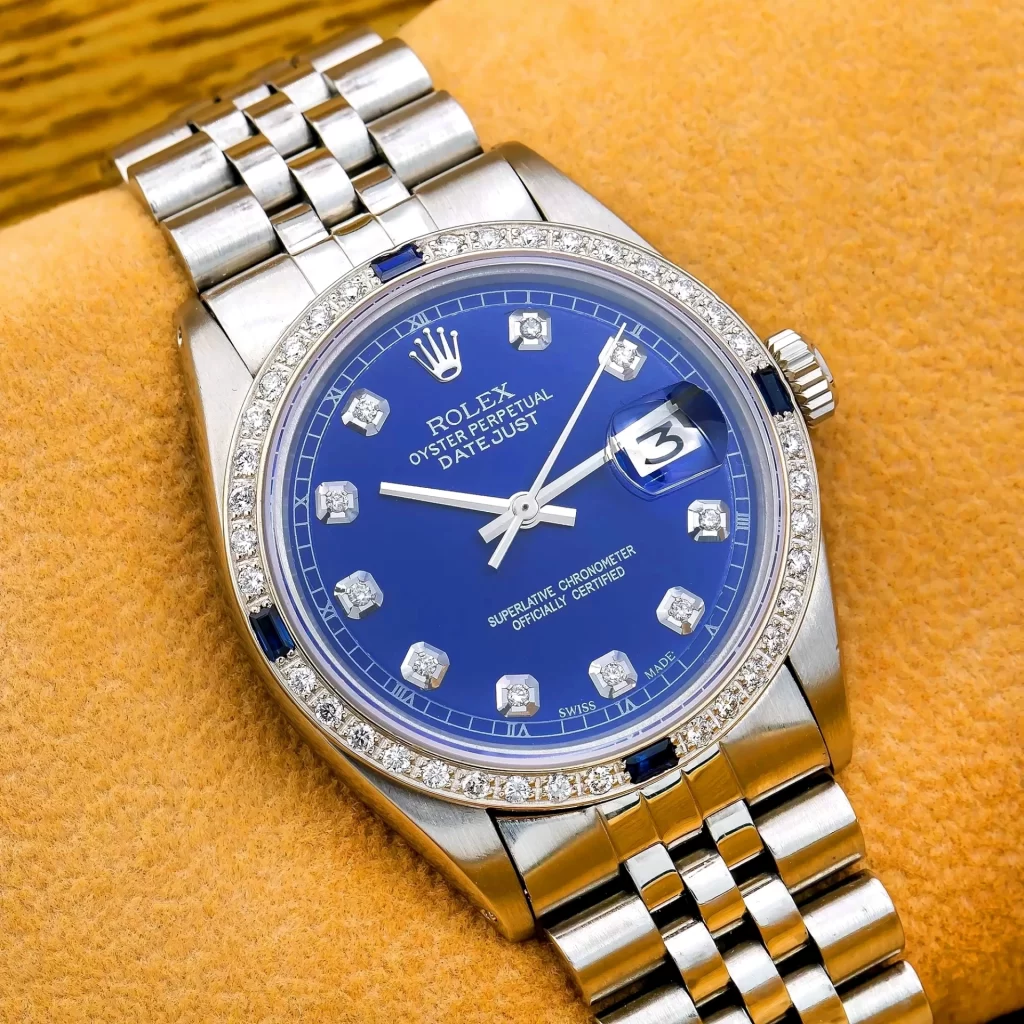
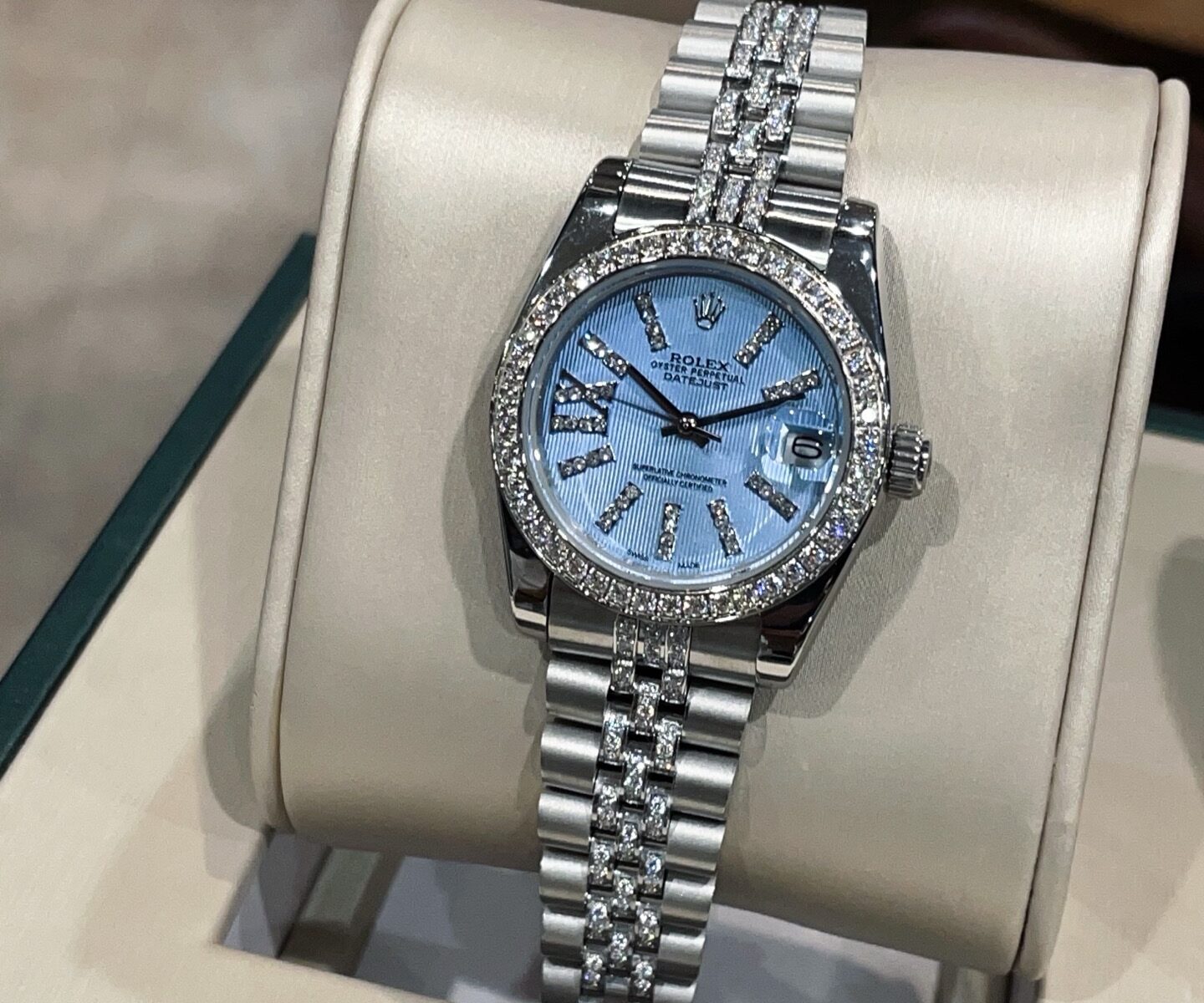
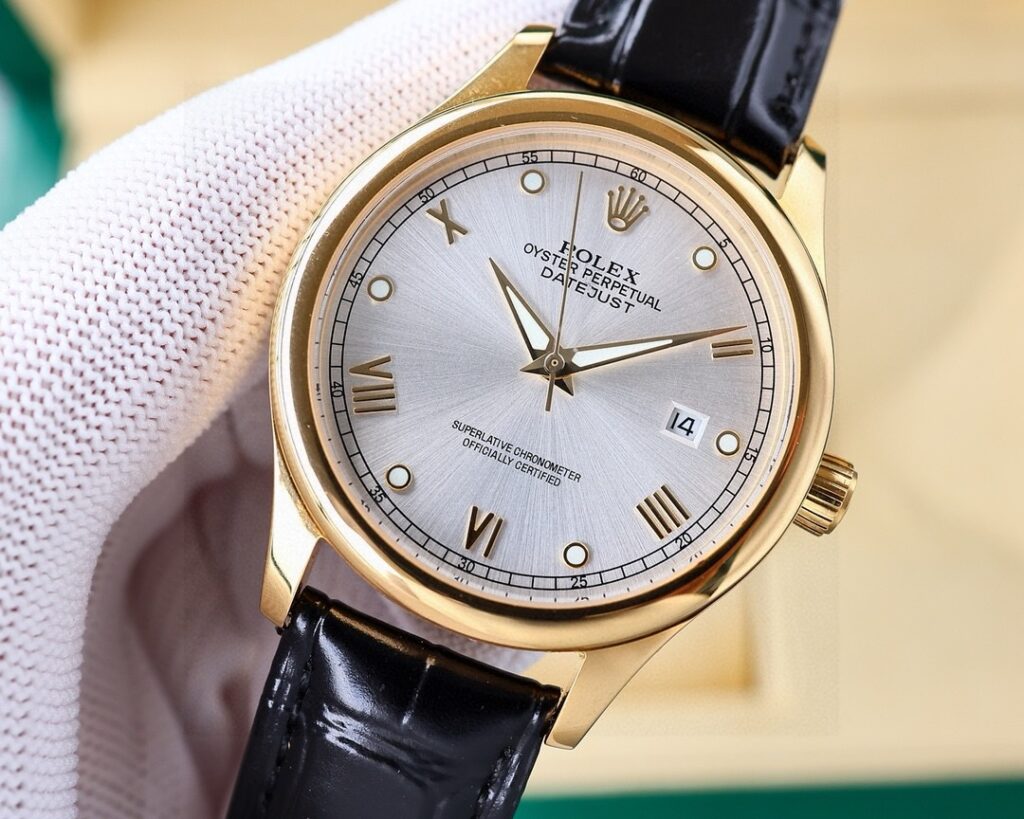
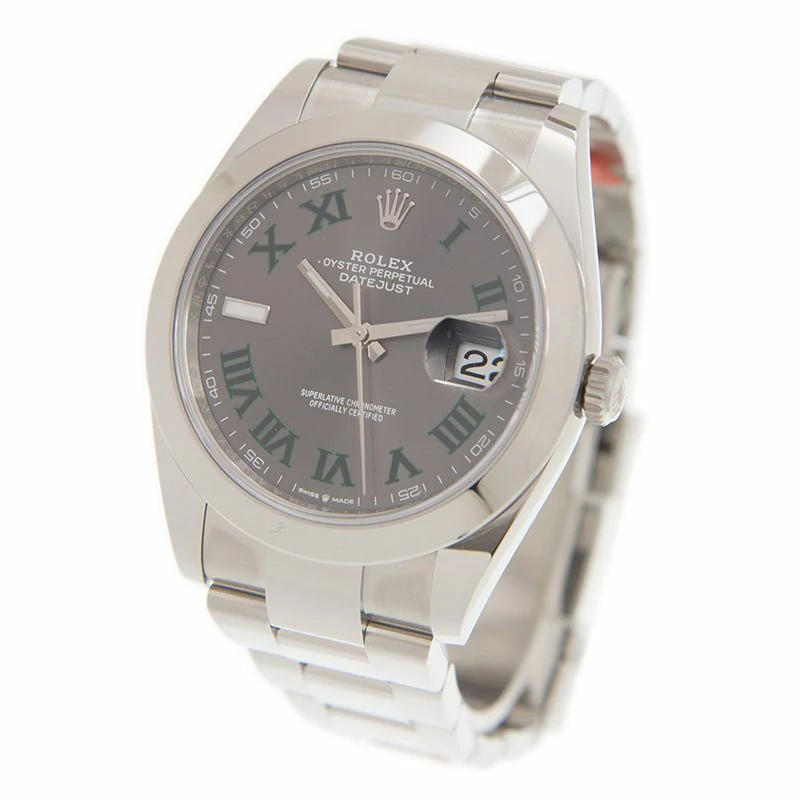
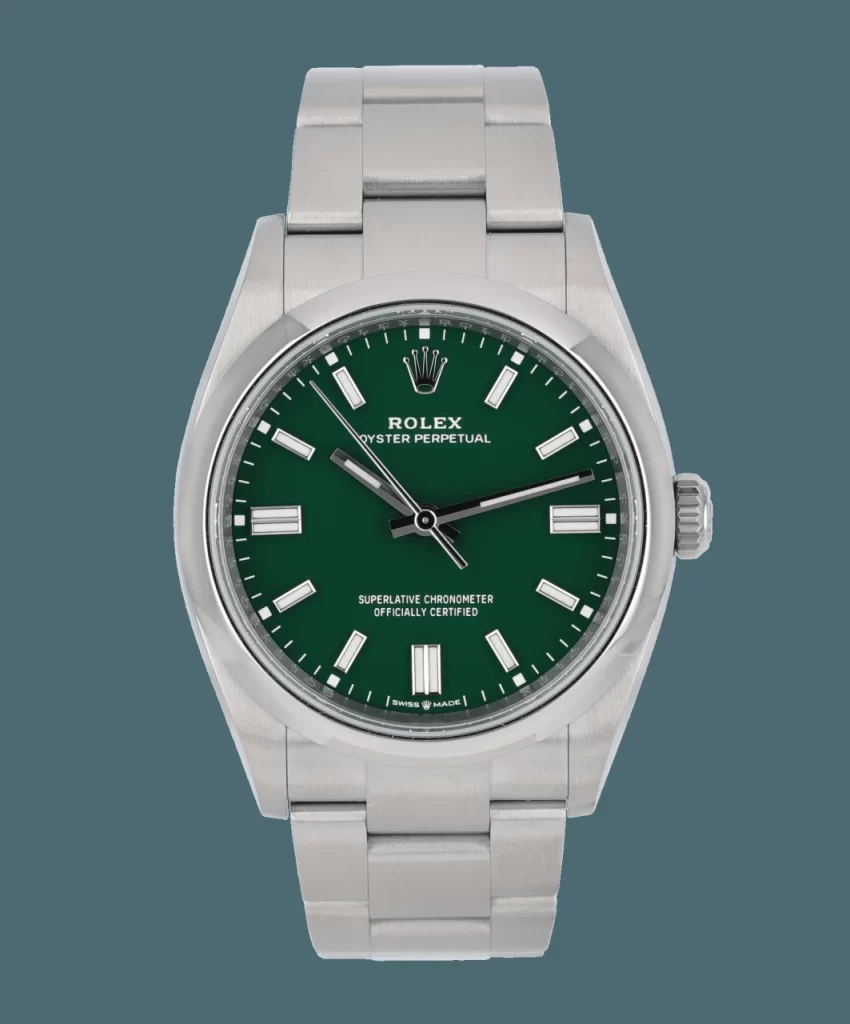
Slawn’s latest Rolex project is built around a simple but ambitious idea: take one of the world’s most recognizable luxury objects and allow twelve different cultural identities to reshape it.
The British-Nigerian artist has revealed the first details of The Slawn Rolex Multiverse, a project consisting of 12 one-of-one Rolex watches created around a group of collaborators drawn from music, football, fashion, art and nightlife. The full project is scheduled to be unveiled through its dedicated website on August 18, 2026.
At first glance, the project could be read as another celebrity-driven luxury collaboration. The more interesting story, though, is what happens when a highly standardized luxury object becomes a canvas for radically different cultural identities.
Twelve Watches, Twelve Identities The announced lineup includes Ronaldinho, Verdy, Clint419, Mario Balotelli, ZacFTP, Motherlan, Gunna, Gabriel Moses, David Grutman, Cedric Christie and Lil Yachty, with two additional collaborators still undisclosed. Each participant is associated with an individual one-of-one Rolex.
The significance of the lineup is not simply the number of famous names involved.
It crosses several cultural ecosystems that rarely appear together in the same watch project. Ronaldinho and Balotelli connect the project to football culture. Gunna and Lil Yachty bring contemporary rap and music into the picture, while Verdy, Clint419 and Gabriel Moses represent different sides of fashion, visual art and image-making.
That diversity gives the word “Multiverse” a practical meaning. Rather than presenting a single interpretation of Slawn’s visual language, the project appears designed to show how that language changes when it encounters different people and communities.
Why Rolex Makes an Interesting Canvas Rolex is an unusually recognizable starting point for this kind of experiment.
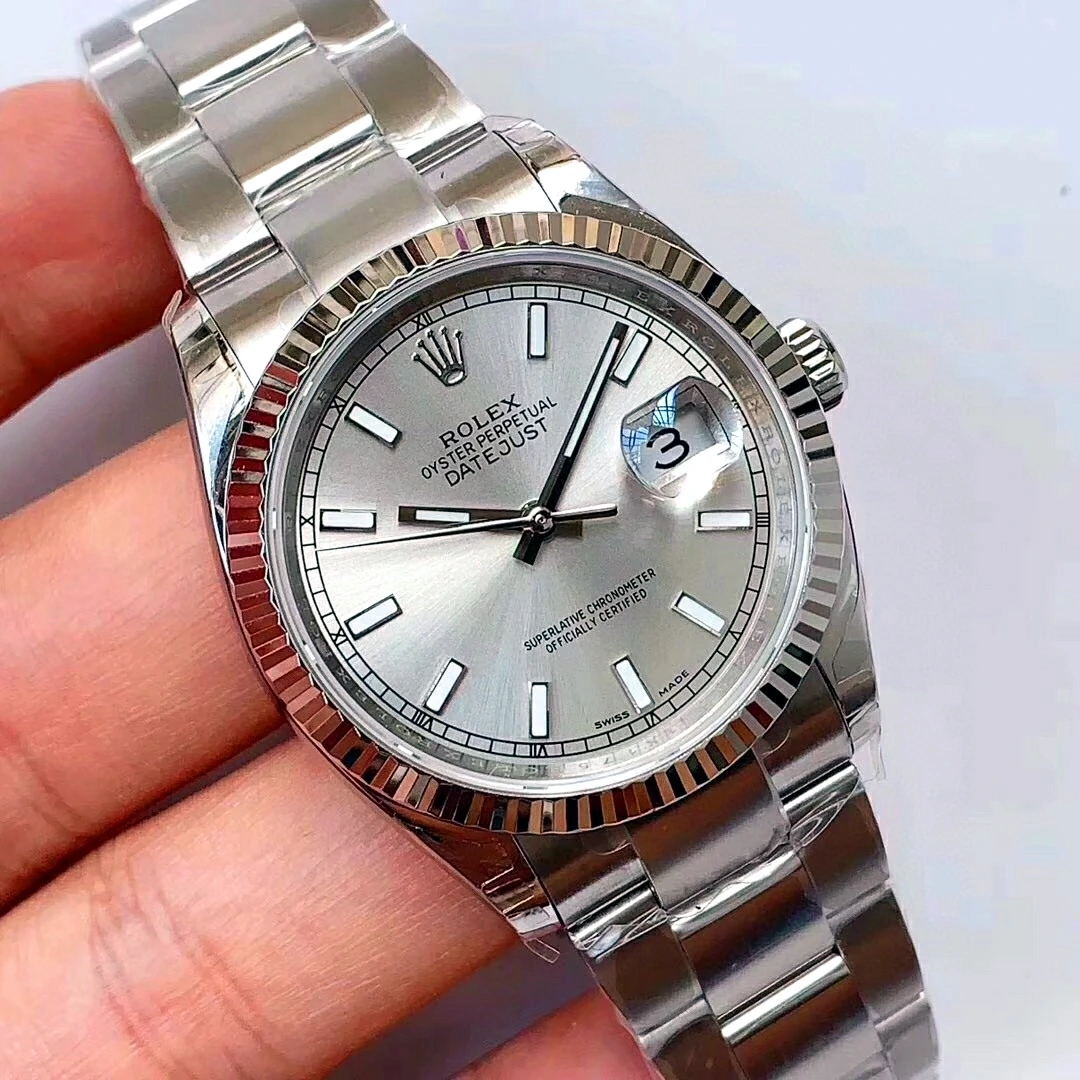
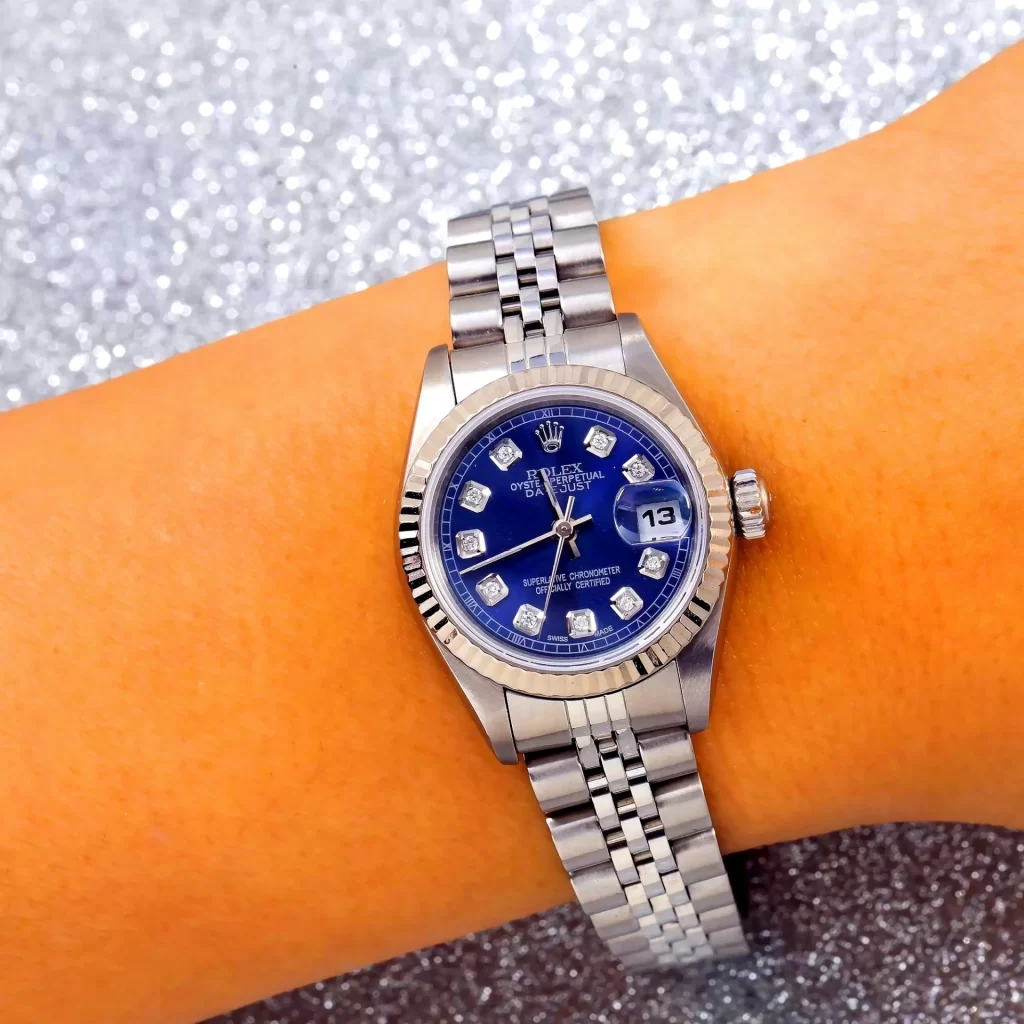
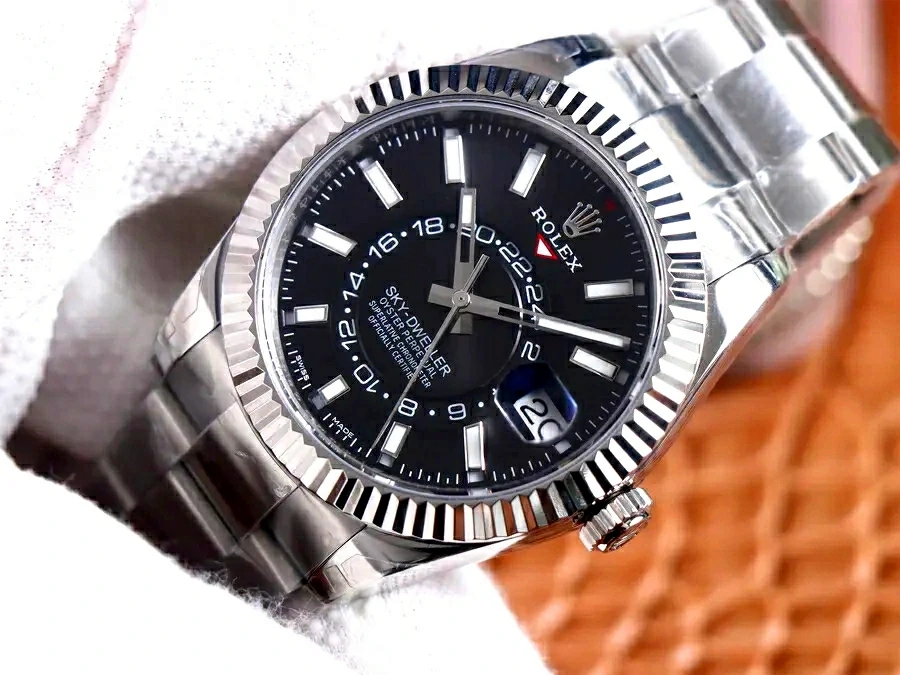
The brand’s current collection is defined by a tightly controlled product architecture, with established families such as the Datejust, Day-Date, GMT-Master II, Submariner, Sky-Dweller and Land-Dweller. Individual references are specified by case dimensions, materials, movements, bracelets and other technical details.
That consistency is a major part of Rolex’s identity.
It also creates a useful contrast with Slawn’s approach to art. His work is known for an intentionally expressive visual language, making the Rolex watch less of a neutral timekeeping instrument and more of a recognizable cultural object that can be reinterpreted.
This tension is where the project becomes interesting.
A conventional luxury watch collaboration often asks how two brands can combine their identities. The Multiverse appears to ask a different question: what happens when one established object is repeatedly interpreted through the identities of different individuals?
The Collaborators Are Part of the Design The choice of collaborators matters almost as much as the watches themselves.
A one-of-one watch has limited meaning if it is viewed only as an isolated object. Attach it to a recognizable person, however, and it becomes connected to a wider network of references: their career, visual identity, audience and cultural history.
That is particularly important in contemporary fashion and art, where collaboration has increasingly become a method of storytelling.
The Multiverse therefore functions on two levels.
At the object level, there are twelve individual watches.
At the cultural level, there are twelve different stories attached to those objects.
This distinction also explains why the project does not need a large production run to attract attention. One-of-one pieces are inherently scarce, but their real value here is symbolic: each watch is positioned as a specific interpretation rather than one variation from a mass-produced collection.
A Different Kind of Luxury Collaboration The project also reflects a broader change in how luxury objects are used within contemporary culture.
A traditional luxury watch is often presented through technical specifications, craftsmanship, materials and heritage. Those elements remain central to Rolex’s own product communication.
Slawn’s project approaches the watch from another direction.
The emphasis is placed on authorship and identity.
That does not make the technical side of watchmaking irrelevant. Instead, it changes what the object is being asked to communicate. The watch becomes a physical record of a particular cultural relationship: Slawn’s artistic language meeting the identity of an individual collaborator.
This is closer to contemporary art practice than to the launch of a conventional watch collection.
The Project’s Real Test Comes After the Reveal The current previews remain limited. The initial material gives viewers an animated glimpse of the project, while two collaborators are still being kept secret. The dedicated website is scheduled to open on August 18, when more information about the watches should become available.
That means several important questions remain unanswered.
Which Rolex references were selected?
How extensively were the watches modified?
What elements come directly from Slawn, and what was contributed by each collaborator?
Are the watches intended primarily as artworks, collectibles, or wearable pieces?
And perhaps most importantly, what is the relationship between the project and Rolex itself?
Those distinctions matter. Rolex’s official catalogue does not currently list the Slawn Multiverse as a standard model or collection, so it is more accurate to describe the project according to the information currently available rather than automatically treating it as a conventional Rolex product launch.
Why the Slawn Rolex Multiverse Matters The strongest idea behind the project is not scarcity, celebrity or even Rolex.
It is translation.
A Rolex already carries an enormous amount of cultural meaning before an artist touches it. Slawn’s experiment is to see how much of that meaning can be transformed without losing the object’s original identity.
With twelve different collaborators, the result becomes a kind of cultural map. Football, music, fashion, photography, nightlife and art occupy different territories, yet they can all be represented through the same physical object.
That is why the Multiverse is worth watching beyond the initial reveal.
If the finished pieces successfully preserve the recognizability of the Rolex while giving each collaborator a genuinely distinct visual identity, the project will demonstrate something more interesting than a luxury collaboration: a familiar object can become a record of an entire creative community.
Rolex sits at the center of the watch conversation whether people like it or not. Mention the Explorer or the Daytona in a room full of enthusiasts and somebody will immediately start talking about waitlists, proportions, or why the older references were supposedly better. That’s just how it goes.
Still, not everyone wants the obvious choice. Some collectors already own a Rolex and want something with a different personality. Others simply don’t feel like paying current market prices for a stainless steel sports watch. Fair enough.
So we picked ten watches that capture at least part of the appeal of the Explorer and Daytona without feeling like direct copies. Some are affordable. Some absolutely are not. A few lean vintage. Others feel very modern. That mix is what makes this kind of list fun in the first place.
And honestly, narrowing it down to five alternatives for each model was harder than expected.
Five Great Alternatives To The Rolex Explorer
The modern Rolex Explorer remains one of the cleanest everyday watches on the market. No rotating bezel. No unnecessary text. Just the familiar 3-6-9 dial and that understated “go anywhere” personality replica Rolex has refined for decades.
The current lineup comes in both 36mm and 40mm sizes, which helps. But it also means the Explorer now competes with a surprisingly broad range of watches.
These five stood out to us the most.
Explorer Alternatives At A Glance
Watch
Case Size
Movement
Power Reserve
Price
IWC Pilot’s Watch Mark XX
40mm
IWC Cal. 32111
120 hours
€6,900
Tudor Ranger
36mm / 39mm
MT5400 / MT5402
70 hours
From €3,520
Omega Railmaster
38mm
Omega Cal. 8806
55 hours
€6,100
Nomos Club Sport Neomatik
34mm / 37mm / 39mm
DUW 3001
43 hours
From €2,600
Christopher Ward C65 Dune Aeolian
38mm
Sellita SW200-1
38 hours
€1,165
IWC Pilot’s Watch Mark XX
The IWC Mark series has quietly become one of the safest recommendations in modern watchmaking. Maybe too safe, some would argue. But there’s a reason enthusiasts keep circling back to it.
The current Mark XX feels refined in a very unflashy way. Put it on the bracelet and it suddenly makes a lot of sense. The five-row design gives the watch more character than older generations ever had, and comfort is genuinely excellent. You notice it after about five minutes on the wrist.
For this list, the black-dial version is the obvious pick. The blue and green models look great too, though they drift further away from the Explorer formula.
The case measures 40mm wide and just 10.8mm thick, which helps the watch wear flatter than many modern sports watches. On paper, 49mm lug-to-lug sounds slightly long. In reality, it’s manageable unless your wrist is particularly small.
The dial layout is classic IWC pilot territory. Big Arabic numerals. Clear minute track. Strong legibility from basically any angle. Unlike the Explorer, though, you also get a date window at 3 o’clock. Some people still refuse to accept a date complication on a minimalist field-style watch. Others genuinely don’t care.
I’m probably somewhere in the middle.
Inside sits the IWC caliber 32111, a ValFleurier-produced automatic movement with a huge 120-hour power reserve. That’s one of those specs you stop thinking about until you rotate watches for a few days and realize the thing is still running Monday morning.
There’s also the smaller Pilot’s Watch Automatic 36 if the Mark XX feels too large. Same overall vibe, slightly more compact proportions, and honestly, it may be the better daily wearer for many people.
Tudor Ranger
This one was inevitable.
The Tudor Ranger has always lived in the Explorer’s shadow a little, although the current version actually leans much harder into vintage Rolex Explorer ref. 1016 territory than the modern Explorer itself does. That’s partly what makes it appealing.
Last year Tudor expanded the Ranger lineup with new 36mm versions, including black- and beige-dial models. And after spending time with them, the smaller case simply feels right. The 39mm Ranger is still good, but the 36mm version has better balance overall.
Funny enough, that mirrors the debate happening around the modern Explorer too.
The Ranger keeps things simple:
brushed steel case
matte dial
oversized Arabic numerals
highly legible handset
Well… mostly beloved handset. The shovel-style hour hand still divides people. Some enthusiasts genuinely dislike it. Others think it gives the watch personality. Personally, I stopped noticing it after a day or two.
The 36mm version uses Tudor’s MT5400 movement, while the 39mm gets the MT5402. Both are COSC-certified chronometers with 70 hours of power reserve, and Tudor’s recent movements have earned a pretty strong reputation for reliability.
One detail worth mentioning: the bracelet.
Unlike many Black Bay models, the Ranger skips the faux rivets entirely. Good decision. The cleaner bracelet suits the watch far better and gives it a more modern feel without ruining the vintage inspiration.
At around €3,500, the Ranger also sits in an interesting spot. It’s not “cheap” anymore — let’s be honest about modern watch pricing — but compared to current Rolex market realities, it starts looking very reasonable.
Omega Railmaster
The Railmaster has quietly become one of Omega’s most underrated watches.
Historically, it competed more directly with the Rolex Milgauss. Both emerged during the 1950s as tool watches aimed at engineers and scientists working around magnetic fields. Today, though, the Railmaster feels much closer in spirit to the Explorer.
Especially the gray-dial version.
The current model uses the same 38mm case architecture as the Aqua Terra, but the overall personality is completely different. Less polished. Less luxury-adjacent. More straightforward tool watch.
And honestly, that helps.
The dial design works particularly well here. The gradient gray surface, luminous triangular markers, and oversized 3-6-9 numerals give the replica watch a slightly rugged look without pushing into faux-vintage territory. Omega could’ve easily overdone this watch. Somehow they didn’t.
Wearability is excellent too. The 45mm lug-to-lug measurement keeps the proportions compact, and the bracelet is one of those designs that disappears on the wrist after a while.
Inside sits Omega’s Co-Axial Master Chronometer caliber 8806, certified by METAS and resistant to magnetic fields up to 15,000 gauss. That anti-magnetic capability isn’t just marketing fluff either. Omega has leaned heavily into that technical side over the past decade, and few brands currently match them there.
What’s interesting is how different the Railmaster feels compared to the Aqua Terra despite sharing so much hardware underneath. The Aqua Terra feels polished and contemporary. The Railmaster feels almost stubbornly utilitarian.
For many enthusiasts, that’s exactly the point.
Nomos Club Sport Neomatik
Nomos approaching the Explorer concept was never going to produce a traditional-looking watch.
Thankfully.
The Club Sport Neomatik brings a very different personality to this category, and depending on your taste, it may actually feel more refreshing than the obvious Swiss alternatives.
That said, sizing matters here.
The black-dial 42mm model exists, but the long lugs make it wear noticeably larger than the numbers suggest. For most wrists, the 37mm or 39mm versions are probably the sweet spot.
The gray “Smoke” dial in the 39mm lineup comes closest to classic Explorer territory, although even then, the watch still looks unmistakably Nomos. The typography alone gives it away instantly.
That’s part of the charm.
The polished case, thin bezel, and clean dial layout create a lighter, more modern feel than the rugged watches elsewhere on this list. Yet the Club Sport still has enough robustness to function as a genuine daily wearer.
Inside is the in-house DUW 3001 automatic caliber. It’s slim, reliable, and beautifully finished, especially if you choose the sapphire display back. Nomos movements always punch above their price category visually. You don’t really expect that level of refinement until you turn the watch over.
And yes, the colorful dials deserve attention too.
The Tabac version in particular has that annoying quality where it stays in your head long after you’ve stopped looking at photos of it. Some watches just do that.
Prices start around €2,600, which feels surprisingly fair given the movement quality and overall finishing.
Christopher Ward C65 Dune Aeolian
Christopher Ward has become increasingly difficult to ignore over the past few years.
The older criticism — decent watches with awkward branding — doesn’t really hold up anymore. The brand has improved rapidly, especially when it comes to case finishing, bracelet quality, and overall coherence.
The C65 Dune Aeolian is a great example.
The updated textured dials give the watch far more personality than earlier versions, and the gray dial works particularly well if you’re chasing subtle Explorer-like versatility.
Dimensionally, the watch is excellent:
38mm diameter
11.9mm thickness
43.7mm lug-to-lug
Those are genuinely wearable proportions.
The Bader bracelet deserves praise too. At this price point, it’s probably one of the best bracelets available. Screw links, on-the-fly micro-adjustment, solid finishing — features that used to belong exclusively to much more expensive watches now show up here.
The Sellita SW200-1 inside isn’t exciting, admittedly. The 38-hour power reserve feels a little dated in 2026. But reliability counts for something, and serviceability matters more than enthusiasts sometimes admit online.
As an affordable everyday sports watch, the C65 Dune simply works.
And at just over €1,100, that matters quite a bit.
Five Strong Alternatives To The Rolex Daytona
The Daytona occupies a strange place in the watch world now.
It’s simultaneously one of the most famous chronographs ever made and one of the hardest modern Rolex models to buy at retail. Even people who aren’t particularly interested in watches recognize it immediately.
That popularity creates a problem though. If you genuinely want a great chronograph rather than specifically a Daytona, the market suddenly opens up in fascinating ways.
These are the five alternatives we’d seriously consider.
Daytona Alternatives At A Glance
Watch
Case Size
Movement
Power Reserve
Price
Omega Speedmaster Calibre 321
39.7mm
Omega Cal. 321
55 hours
€17,100
Zenith Chronomaster Sport
40mm
El Primero 3600
60 hours
€12,200
Breitling Chronomat B01 42
42mm
Breitling B01
70 hours
€9,400
Tudor Black Bay Chrono
41mm
MT5813
70 hours
€6,300
Seiko Prospex Speedtimer Solar Chronograph
39mm
V192 Solar Quartz
6 months
€750
Omega Speedmaster Calibre 321 “Ed White”
If the Explorer discussion creates arguments among enthusiasts, the Daytona versus Speedmaster debate basically guarantees one.
The Speedmaster Calibre 321 “Ed White” isn’t trying to compete directly with the Daytona stylistically. But emotionally? Different story.
Omega went unusually deep when recreating the legendary caliber 321. The movement is assembled twice by a single watchmaker, adjusted, disassembled, cleaned, and then rebuilt again. That process sounds slightly obsessive. It probably is.
But the result feels special in a way mass-produced luxury watches sometimes don’t.
The straight-lug 39.7mm case stays remarkably faithful to the original Speedmaster 105.003 worn during NASA’s early Gemini missions. Put the watch side by side with a regular Moonwatch and the differences become obvious surprisingly quickly. The case lines are sharper. The finishing is richer. Even the dial texture feels more nuanced.
Then there’s the movement itself.
Turn the watch over and the Sedna Gold-plated caliber 321 completely steals the show. Omega clearly understood enthusiasts would spend an unhealthy amount of time staring at it through the sapphire caseback.
And honestly? They were right.
At over €17,000, this isn’t exactly an attainable alternative. But compared to current secondary-market Daytona pricing, it starts making a lot more sense than it initially sounds.
Zenith Chronomaster Sport
The “Zaytona” nickname followed the Chronomaster Sport around immediately after launch. Some people still use it. A little unfairly, perhaps.
Yes, the visual similarities to the Daytona were obvious at first. Ceramic bezel. Compact chronograph layout. Oyster-style bracelet. Nobody missed the comparison.
But over time, the watch established its own identity.
Part of that comes from Zenith’s history with Rolex itself. After all, Zenith supplied modified El Primero movements for the automatic Daytona generation from 1988 through 2000. That connection alone gives the Chronomaster Sport more legitimacy than most Daytona alternatives could ever claim.
The current lineup has also expanded significantly. Ceramic bezels, steel bezels, titanium versions, colorful dials, meteorite dials — there’s far more variety now than people realize.
Still, the classic white or black tricolor-register versions remain the strongest options.
Inside sits the El Primero 3600, a modern evolution of one of the most important automatic chronograph calibers ever made. The movement runs at 36,000 vibrations per hour and measures elapsed time down to 1/10th of a second. More importantly, it just feels alive in operation. High-beat chronographs always do.
And despite early criticism, the Chronomaster Sport has gradually become one of the most widely respected modern Zenith models.
Funny how that happens sometimes.
Breitling Chronomat B01 42
The modern Chronomat shouldn’t work as well as it does.
On paper, the watch sounds slightly excessive:
42mm case
15.1mm thick
prominent bezel tabs
highly recognizable Rouleaux bracelet
Yet once it’s on the wrist, most of those concerns disappear.
Breitling handled the redesign carefully back in 2020. The brand modernized the Chronomat without erasing the slightly loud personality that made the original popular during the 1980s and early ’90s.
The rider-tab bezel remains wonderfully recognizable. Same goes for the bracelet, which still feels unlike anything else in the industry. Some collectors adore it immediately. Others need time to warm up to it.
Either reaction is understandable.
Inside is Breitling’s in-house B01 movement with a healthy 70-hour power reserve and a very solid reputation overall. Over the last decade, Breitling has quietly become much more technically impressive than many enthusiasts give it credit for.
The copper-dial version remains my personal favorite. There’s something unexpectedly warm about it, especially under natural light.
Not every chronograph needs to be monochrome and ultra-serious.
Tudor Black Bay Chrono
Tudor entering this list was almost unavoidable too.
The Black Bay Chrono borrows a fair amount of Daytona energy, especially from vintage manually wound references, but it still feels distinctly Tudor once you spend time with it.
The snowflake hands alone guarantee that.
Compared to the Daytona, the Black Bay Chrono is larger, thicker, and more rugged overall. Some buyers will actually prefer that. Others won’t. Wrist shape matters quite a bit here because the 50mm lug-to-lug gives the watch real presence.
The dial layout also differs noticeably:
two-register display
45-minute counter
date at 6 o’clock
Purists may complain about the date. Realistically, many owners probably appreciate the practicality.
Inside is the MT5813 movement, based on Breitling’s excellent B01 architecture. Tudor’s collaboration with Breitling still feels slightly surprising in hindsight, although it produced one of the stronger modern chronograph calibers in this price category.
Last year’s addition of the Jubilee-style bracelet changed the watch more than expected too. The older Oyster-style bracelet still suits the Black Bay Chrono better in my opinion, but the five-link bracelet softens the overall look considerably.
The pink and turquoise models created massive hype online, of course. Personally, I still think the reverse panda remains the cleanest execution.
Sometimes the obvious version is obvious for a reason.
Seiko Prospex Speedtimer Solar Chronograph
Every list like this needs at least one genuinely accessible option.
The Seiko Prospex Speedtimer Solar Chronograph fills that role perfectly.
The 39mm versions are especially good because the proportions simply work better than the larger 41mm models. Compact case, balanced dial, comfortable bracelet. Nothing feels overdesigned.
And unlike many affordable chronographs, these watches are actually enjoyable to live with day to day.
The solar-powered V192 movement may lack the romance of a mechanical caliber, sure. But six months of power reserve from a full charge is incredibly practical. No winding. No accuracy anxiety. Just grab the watch and wear it.
Seiko also did a nice job with the dial colors recently. The white panda configuration looks great, but the softer pink and pale green versions add some personality without drifting into novelty territory.
At around €750, the Speedtimer becomes very easy to recommend.
Not because it imitates the Daytona particularly closely. It doesn’t, really.
It’s here because it captures the same sporty, wearable chronograph spirit while remaining attainable for normal people. And honestly, there’s something refreshing about that.
There are obviously dozens of other watches that could’ve made both lists. The TAG Heuer Carrera still deserves consideration. The Baltic Scalegraph Classic is charming in a very different way. And the IWC Pilot’s Watch Chronograph AMG remains one of the cleaner modern aviation chronographs around.
One of the most defining shifts in modern watch culture is women embracing replica Rolex’s professional models. Larger case sizes – 40mm and beyond – have become powerful style statements rather than compromises.
Rolex Daytona The clone Rolex Daytona’s perfectly proportioned chronograph case and motorsport heritage make it one of the most versatile luxury watches ever created. On a woman’s wrist, it feels intentional, confident, and impossibly chic.
Submariner & GMT-Master II These icons bring history, function, and unmistakable wrist presence. Whether it’s the Submariner’s diving legacy or the GMT-Master II’s world-travel functionality, these watches offer strength without sacrificing elegance.
Choosing the Right Size While 26mm once defined femininity, modern preferences have expanded dramatically. Today, 28mm, 31mm, and 36mm are the most popular sizes, with many women confidently wearing 40mm and larger. The right size is not about rules – it’s about balance. Case diameter, lug-to-lug length, wrist shape, and lifestyle all matter. The best advice remains timeless: try it on, wear it for a day, and let comfort guide you.
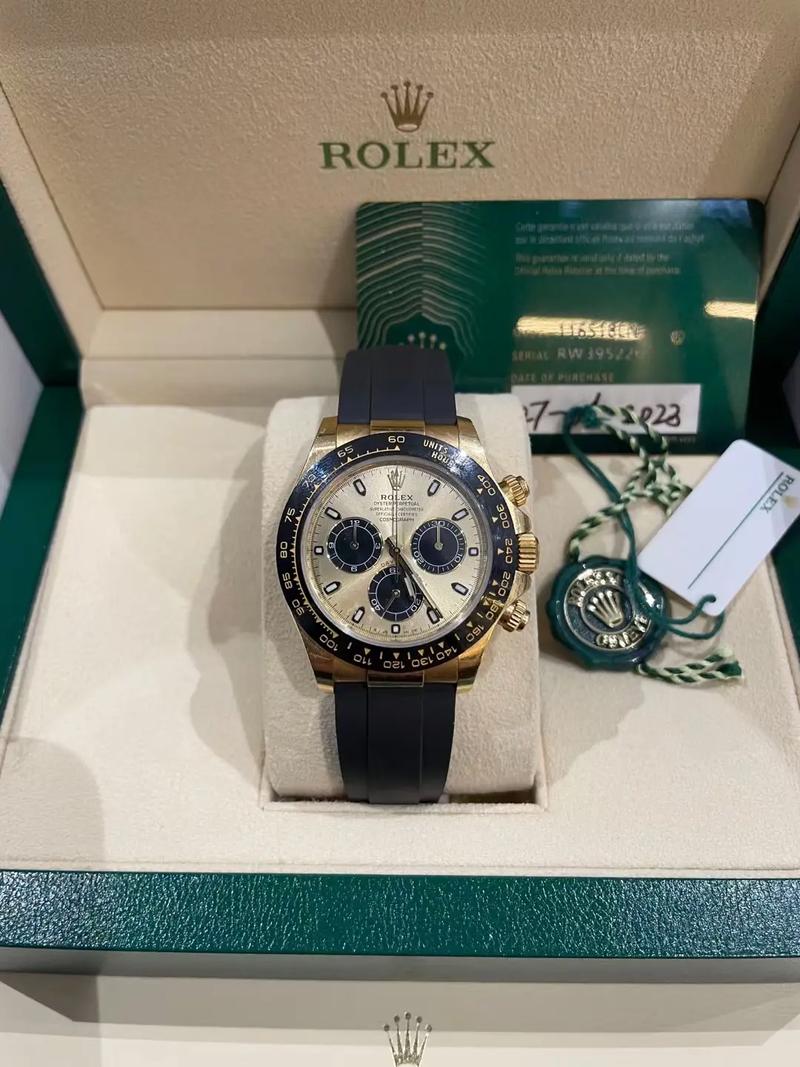
Investment Considerations While emotional connection should always come first, certain fake Rolex models have demonstrated exceptional value retention. Stainless steel professional models – particularly the Daytona and Submariner – remain among the strongest performers due to scarcity and demand. For a more traditional approach, precious-metal Day-Date models offer intrinsic value supported by gold or platinum content. Condition, originality, and complete sets (box and papers) are critical factors.
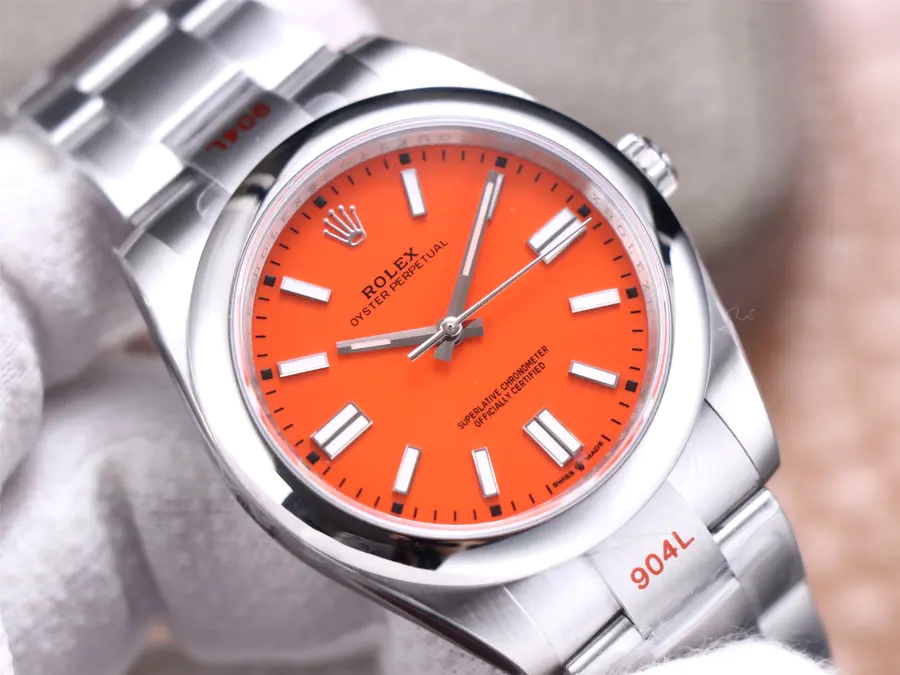
The Ideal First Rolex For first-time buyers, the Oyster Perpetual in 31mm or 36mm is difficult to surpass. It is timeless, versatile, and mechanically identical in quality to Rolex’s most complex offerings. A pre-owned stainless steel Datejust is another exceptional starting point, offering classic design and remarkable longevity at a compelling value.
Rolex Perpetual Movements Unlike many luxury brands that rely on quartz movements for women’s watches, Rolex remains committed to mechanical watchmaking across its entire collection. Every modern Rolex is powered by a self-winding “Perpetual” movement – built to last a lifetime and beyond.
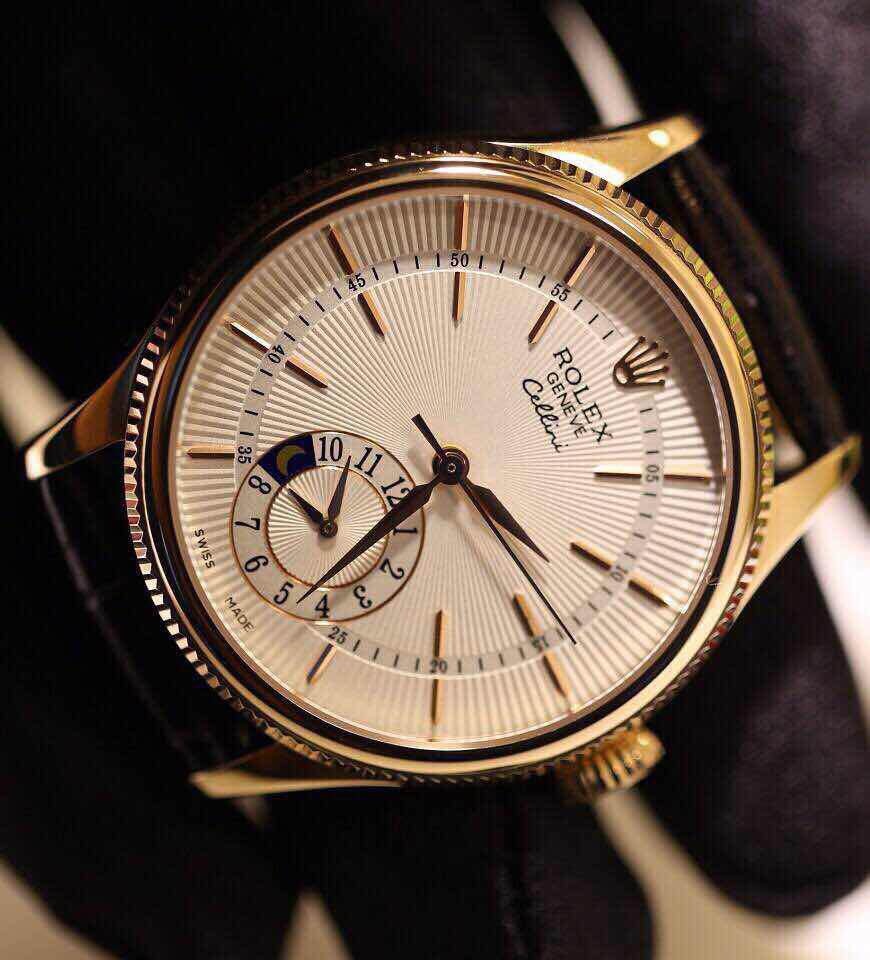
Vintage & Dress Alternatives For women drawn to softer aesthetics, vintage replica Rolex cocktail watches and the now-discontinued Cellini collection offer elegant departures from the Oyster case. These watches recall an era when femininity and artistry defined watch design, making them deeply personal and historically rich choices. The best Rolex for a woman is not defined by size, price, or tradition – but by resonance. Whether it’s a minimalist Oyster Perpetual, a commanding Day-Date, or a boldly worn Daytona, the right watch becomes part of your identity.
Rolex has treated innovation not as a spectacle but as a process of accumulation. References evolve slowly, dimensions shift by millimeters, and movements are refined incrementally – often over generations. This deliberate conservatism has been central to the Crown’s dominance, reinforcing its reputation for continuity, reliability, and restraint.
Rather than a routine model-year update, replica Rolex’s 2026 output reads like a deliberate assertion of range and technical ambition. The brand introduced its first fully integrated sports watch, expanded its presence beyond the wrist with an officially sanctioned Submariner Date desk clock, and reinforced its institutional narrative through the release of a second authorized book volume. Each move targeted a different audience, yet together they suggested something far more significant: a Rolex willing to operate outside its long-established comfort zone.
The Land-Dweller and Rolex’s Return to Integration The Land-Dweller marks Rolex’s first true engagement with the integrated-bracelet sports watch category since the discontinuation of the Oysterquartz in the early 2000s. While integrated designs have dominated the high-end sports segment for decades, Rolex conspicuously avoided the genre – until now. Visually, the watch is unmistakably modern yet characteristically Rolex. The newly developed “Flat Jubilee” bracelet blends the visual rhythm of the classic Jubilee with the structural continuity demanded by an integrated architecture. Its execution is technically impressive, with tight tolerances, exceptional articulation, and finishing that balances refinement with durability.
Calibre 7135 and the Dynapulse Escapement Every mechanical Rolex movement produced prior to the Land-Dweller relied on the Swiss lever escapement – a design chosen for its robustness and serviceability rather than theoretical efficiency. Calibre 7135 breaks that lineage entirely. At its core is the newly developed Dynapulse escapement, a radical departure from Rolex tradition. Instead of a single escape wheel and pallet fork, the system employs two silicon distribution wheels driven by a transmission wheel linked directly to the mainspring barrel. Energy is delivered to the balance via a rocker mechanism, eliminating the sliding friction inherent to lever escapements. The technical benefits are substantial: Significantly reduced friction Improved energy efficiency Greater rate stability over time Potentially extended service intervals
All escapement components are fabricated from silicon, rendering the system effectively amagnetic and resistant to temperature variation. The movement operates at 5 Hz (36,000 vph), making it Rolex’s first high-beat mechanical calibre – a notable philosophical shift for a brand historically content with 4 Hz precision. This is not incremental refinement. It is a foundational rethink.
What 2026 Signals for Rolex Viewed collectively, Rolex’s 2026 releases suggest a brand consciously expanding its definition of legitimacy. The Land-Dweller challenges entrenched assumptions about what a fake Rolex sports watch can be, while the Dynapulse escapement signals a willingness to abandon even the most sacred internal conventions when performance gains justify the risk. Importantly, none of this feels experimental in the traditional sense. The execution remains controlled, industrialized, and unmistakably Rolex. Innovation, here, is not framed as disruption but as inevitability.
Rolex has been synonymous with excellence, innovation, and timeless prestige. The brand’s reputation has been shaped not only by technical mastery and meticulous craftsmanship but also by its cultural significance and enduring emotional appeal. To understand why Rolex stands above other luxury watchmakers, one must look at how the company combines precision engineering, exclusive design, and an aura of achievement that transcends time.
Rolex’s success is not built on a single defining quality but rather on the harmonious blending of multiple elements: unmatched quality, in-house production, enduring design, and a legacy that ties deeply into the stories of human achievement. Whether on the wrist of a Hollywood star, a world leader, or an explorer atop Everest, Rolex embodies a universal symbol of success and reliability.
Rolex’s Uncompromising Craftsmanship Few manufacturers exercise the level of control over production that Rolex does. Every component, from the case to the movement, is designed, developed, and assembled within the company’s own facilities. This vertical integration allows Rolex to maintain uncompromising standards of precision and quality that are unmatched across the industry.
Every Rolex begins its life in one of the brand’s state-of-the-art workshops, where the raw materials – such as Oystersteel, gold, and platinum – are shaped and finished under the watchful eyes of master craftsmen. The brand’s dedication to quality means that the production of a single watch can take nearly a year, with hundreds of components undergoing meticulous inspection and hand assembly. Skilled watchmakers verify each stage of the process, ensuring that every piece bearing the copy Rolex crown performs flawlessly.
This obsessive attention to detail extends beyond manufacturing. Each Rolex undergoes a series of rigorous tests that simulate years of real-world use. The results are watches capable of withstanding extreme pressure, harsh environments, and decades of wear – all while maintaining their precision and brilliance.
The Materials That Define Excellence The quality of a Rolex is not only found in its engineering but also in the exceptional materials used in its construction.
Oystersteel (904L steel), developed for superior corrosion resistance, retains its polish and strength for decades. Used in aerospace and high-tech industries, it gives Rolex watches their distinctive sheen and robustness.
18k Gold and Everose Gold, forged in Rolex’s own foundry, ensure unmatched consistency and color retention. Everose Gold, in particular, was developed to prevent the fading that plagues traditional rose gold alloys, ensuring the metal’s warm hue endures over time.
Platinum, the rarest and most exclusive of Rolex’s materials, is reserved for the brand’s most prestigious models. Its natural luster and weight make it the ultimate expression of quiet luxury.
Cerachrom, Rolex’s proprietary ceramic, redefined bezel construction with its resistance to scratches and fading. The colors remain as vivid decades later as they were on the day of purchase, making Cerachrom bezels both beautiful and nearly indestructible.
Precision Beyond Standards Rolex does not settle for meeting industry benchmarks – it exceeds them. While the Official Swiss Chronometer Testing Institute (COSC) certifies the accuracy of Rolex movements, the brand subjects its watches to further in-house tests under its Superlative Chronometer designation.
Each watch must perform within an astonishing tolerance of -2/+2 seconds per day, twice as stringent as the COSC standard. These tests occur after the movement is encased, replicating real-world conditions. Additionally, every watch undergoes assessments for water resistance, power reserve, and self-winding efficiency. Even water-resistant models are tested under pressures exceeding their rated depth to ensure reliability in the harshest environments.
This exhaustive verification process guarantees that every Rolex not only meets but surpasses expectations for accuracy and durability.
More Than a Watch: A Symbol of Success Owning a Rolex represents more than an appreciation for fine watchmaking – it signifies achievement, confidence, and discernment. For many, purchasing a Rolex marks a milestone, whether a professional accomplishment, a personal victory, or a major life event. That emotional connection transforms the watch from a simple accessory into a cherished heirloom.
A Rolex silently communicates success without ostentation. Its refined presence makes an impression in boardrooms, gala events, and casual settings alike. The brand’s marketing has long reinforced this notion, positioning Rolex not merely as a luxury product but as a reward for excellence and perseverance.
Cultural Icons and Enduring Influence Rolex’s cultural presence extends far beyond the watch industry. Over the decades, the brand has been worn by some of the most influential figures in modern history.
Paul Newman’s association with the Daytona transformed that model into one of the most collectible watches of all time. Sean Connery’s Submariner immortalized Rolex as James Bond’s watch of choice. Dr. Martin Luther King Jr.’s Datejust became a symbol of dignity and quiet leadership. Explorers like Sir Edmund Hillary wore Rolex watches to the summit of Mount Everest, proving their reliability in the world’s harshest environments.
In the modern era, figures such as Roger Federer, Tiger Woods, and filmmaker James Cameron have continued to strengthen Rolex’s image through genuine partnerships. These associations feel authentic because they reflect real admiration rather than mere sponsorship. As a result, Rolex enjoys a level of cultural integration that few brands can replicate.
A Rare Luxury That Holds Its Value Unlike most luxury goods, which depreciate the moment they leave the store, Rolex watches often retain – or even appreciate – in value. This stability stems from the brand’s deliberate control over production and its immense global demand.
Some believe Rolex strategically limits supply to maintain exclusivity. Whether intentional or not, the result is a scarcity that fuels strong resale values and waiting lists for certain models stretching months or even years. Popular models such as the Submariner, Daytona, and GMT-Master II frequently trade for more than their retail prices in the secondary market.
The pre-owned market for Rolex is now more transparent and accessible than ever. Platforms and auctions allow collectors to track value trends, verify authenticity, and acquire discontinued or vintage models that have become investment-grade assets. Over time, these replica watches often appreciate in both monetary and sentimental value.
Even in economic downturns, Rolex has demonstrated remarkable resilience. Its combination of functionality, durability, and prestige makes it a tangible asset that can weather uncertainty – a rarity in the luxury sector.
Timeless Design That Transcends Trends Rolex’s approach to design evolution is deliberate and measured. Instead of chasing fleeting fashion trends, the brand refines its models through incremental improvements. This philosophy of “evolution, not revolution” ensures that Rolex watches remain instantly recognizable and never outdated.
A Submariner from the 1960s, for instance, shares the same fundamental design language as its modern counterpart. This continuity not only preserves brand identity but also protects the long-term value of every watch ever produced. Rolex’s design discipline ensures that every model feels contemporary while honoring its historical roots.
To own a Rolex is to hold a piece of history – an object that embodies human ingenuity, endurance, and aspiration. Each watch represents far more than precision timekeeping; it is a tangible symbol of craftsmanship and perseverance, passed down through generations as a legacy of excellence.
Rolex’s enduring appeal lies in its ability to merge technological innovation with timeless design and emotional significance. In a world where trends fade and technology evolves rapidly, the Rolex crown continues to shine as the ultimate emblem of success, precision, and prestige.
There are few debates among watch collectors as passionate as the one between modern and vintage watches. For some, the latest innovations and impeccable finishes of modern Rolex models define perfection. For others, the warmth of aged patina, the soft glow of tritium lume, and the charm of mechanical simplicity make vintage the only true choice. Yet the fascination with vintage extends far beyond watches-it’s part of a broader cultural movement. Across fashion, furniture, and design, people are rediscovering the appeal of objects that tell a story, carrying the marks of time rather than striving to erase them. The numbers reflect this shift: the ThredUp Resale Report predicts that the global second-hand fashion market will double the growth rate of traditional retail by 2027, while Google Trends shows a steady rise in searches for “vintage Rolex” and “vintage watches.”
In a world driven by fast fashion and constant newness, vintage collecting feels like an act of resistance-a way to reclaim individuality and authenticity. Rolex, perhaps more than any other brand, embodies that spirit. Its vintage models are coveted not only for their rarity and aesthetics but also for their enduring emotional and investment value. Many collectors are drawn to the romance of finding a “birth-year” watch, while others hunt for models seen on icons such as Marlon Brando or the early James Bond. And while today’s Rolex boutiques often have long waiting lists for new models, vintage pieces can sometimes offer faster access, along with the undeniable charm of history. Even price plays a role-a vintage Datejust 16014 from the 1980s often costs far less than its modern equivalent, despite offering the same timeless elegance.
A closer look at the listings on watch market reveals just how vibrant this segment has become. Out of more than 39,000 vintage listings, over 10,000 are Rolex watches-nearly a quarter of the entire vintage offering. This diversity captures the brand’s full DNA: robust tool watches built for professionals, refined dress watches for statesmen, and everything in between. Below are the five most sought-after references that define Rolex’s vintage legacy today.
Rolex Day-Date 36 Ref. 18238 – The Presidential Statement Few watches have symbolized success and authority like the Rolex Day-Date. The Ref. 18238, affectionately known as the “President,” is the embodiment of luxury and prestige. Crafted in solid yellow gold and fitted with the distinctive President bracelet, it proudly displays both the day and date on its dial-a design first introduced in the 1950s and favored by world leaders ever since. Produced from the late 1980s, this reference pairs traditional grandeur with modern practicality, offering a sapphire crystal and quickset mechanism. On the wrist, its 36-mm case exudes understated confidence, proving that true power doesn’t need to shout-it simply shines.
Rolex Submariner Ref. 5513 – The Quintessential Diver The Submariner 5513 is more than a watch-it’s a cultural icon. Produced from 1962 until the late 1980s, this reference defines the archetype of the diver’s watch. Its 40-mm case, rotating bezel, and 200-meter water resistance reflect its utilitarian origins, while its dial variations-from early gilt markings to later maxi dials-give collectors endless nuance to explore. The aging of each watch tells a different story, with faded bezels and creamy lume adding character that modern models can’t replicate. And, of course, the Submariner’s legend was cemented on the wrist of Sean Connery’s James Bond. Among vintage Rolexes, the 5513 remains one of the most romantic and recognizable expressions of the brand’s spirit.
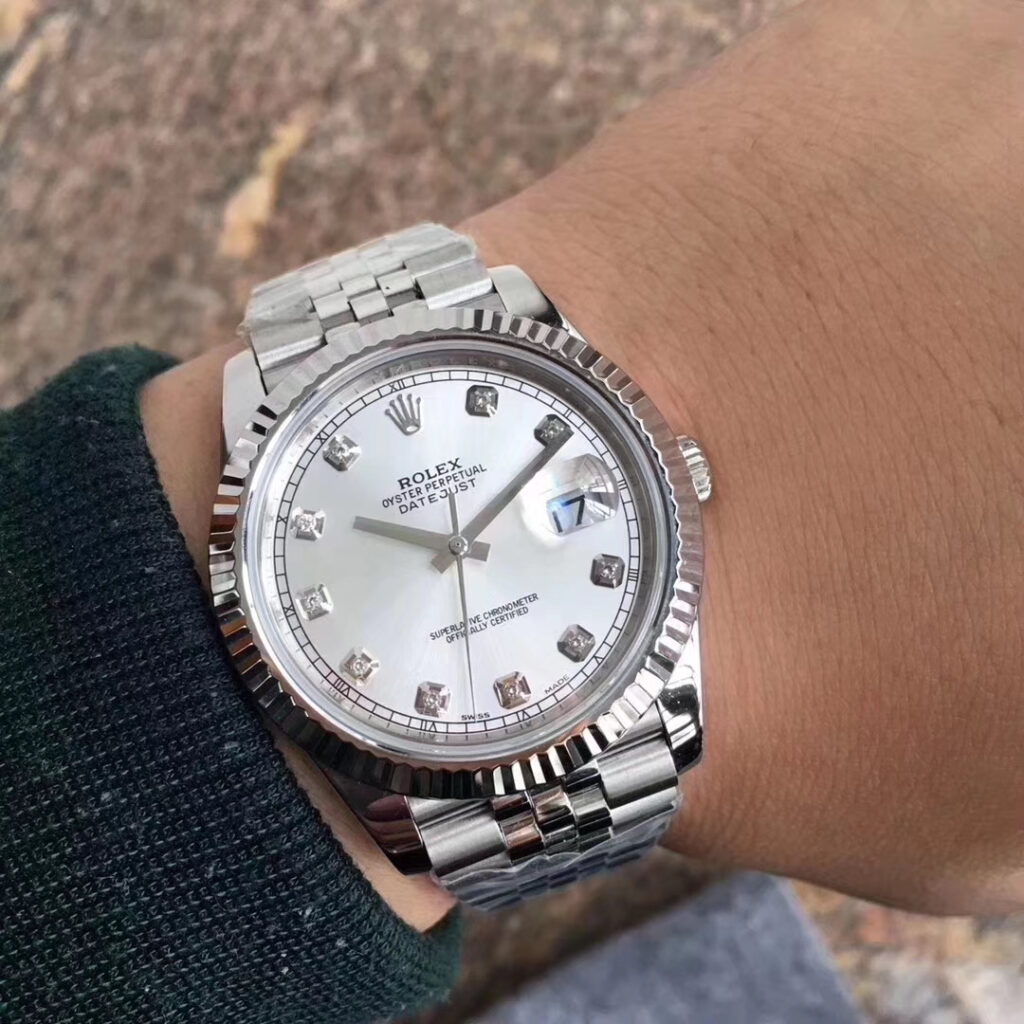
Rolex Datejust 36 Ref. 16233 – The Everyday Classic No other Rolex captures the brand’s timeless elegance quite like the Datejust. The Ref. 16233, produced during the 1980s and 1990s, is the perfect synthesis of refinement and versatility. With its two-tone steel and yellow gold construction, fluted bezel, and Jubilee bracelet, it strikes a delicate balance between luxury and wearability. The champagne dial with Roman numerals remains a collector favorite, but countless variations exist, offering something for every taste. And while modern Datejust models now command prices above $8,000, the 16233 often provides a more attainable entry point into the world of Rolex-without compromising any of its charm.
Rolex GMT-Master Ref. 1675 – The Jet-Set Legend Introduced in 1959, the GMT-Master 1675 was designed for the golden age of aviation, when international travel was becoming a glamorous adventure. Created in partnership with Pan Am, the watch allowed pilots to track two time zones at once-its red-and-blue “Pepsi” bezel now one of the most recognizable features in horology. The 1675 gained cult status when Marlon Brando wore his in Apocalypse Now, stripped of its bezel for a rugged, utilitarian look. Collectors cherish these watches for their rich variations in patina and color, each telling its own story. The GMT-Master 1675 remains a timeless emblem of adventure and cosmopolitan style.
Rolex Oysterdate Precision Ref. 6694 – The Quiet Classic For those who appreciate subtlety over status, the Oysterdate Precision Ref. 6694 is a hidden treasure. Produced from the 1960s through the 1980s, it was one of Rolex’s longest-running models and among the few equipped with a hand-wound movement. Its 34-mm case gives it an understated, vintage appeal, while its minimalist dial and simple date window reflect Rolex’s dedication to form and function. Because it flies under the radar of mainstream collectors, the 6694 often represents exceptional value-a purist’s Rolex that rewards connoisseurs who seek beauty in simplicity.
These five models-Day-Date, Submariner, Datejust, GMT-Master, and Oysterdate-encapsulate everything that makes vintage Rolex collecting so compelling. They are time capsules of craftsmanship, culture, and design evolution, each representing a different facet of the world’s most recognized watch brand. Whether chosen for nostalgia, heritage, or investment, these watches prove that true luxury isn’t about having something new-it’s about owning something timeless.
The Rolex Day-Date has long stood as the ultimate symbol of prestige, a watch worn by world leaders, celebrities, and visionaries. While its core design remains timeless, Rolex continues to refine the collection with subtle yet striking updates. This year, the Rolex Day-Date 40mm receives a dramatic makeover with the introduction of ombré dials, a first for the larger 40mm model, further elevating its luxurious appeal.
Previously exclusive to the Day-Date 36, the ombré effect now graces the Rolex Day-Date 40mm in a stunning slate grey iteration. Crafted in 18kt Everose gold, the dial transitions seamlessly from a soft central grey to a deep black along the edges, creating a mesmerizing play of light. The faceted Roman numerals and index hour markers, also rendered in 18kt pink gold, enhance legibility while complementing the warm tones of the Everose case. This version is a masterclass in understated elegance, perfect for those who appreciate refined sophistication.
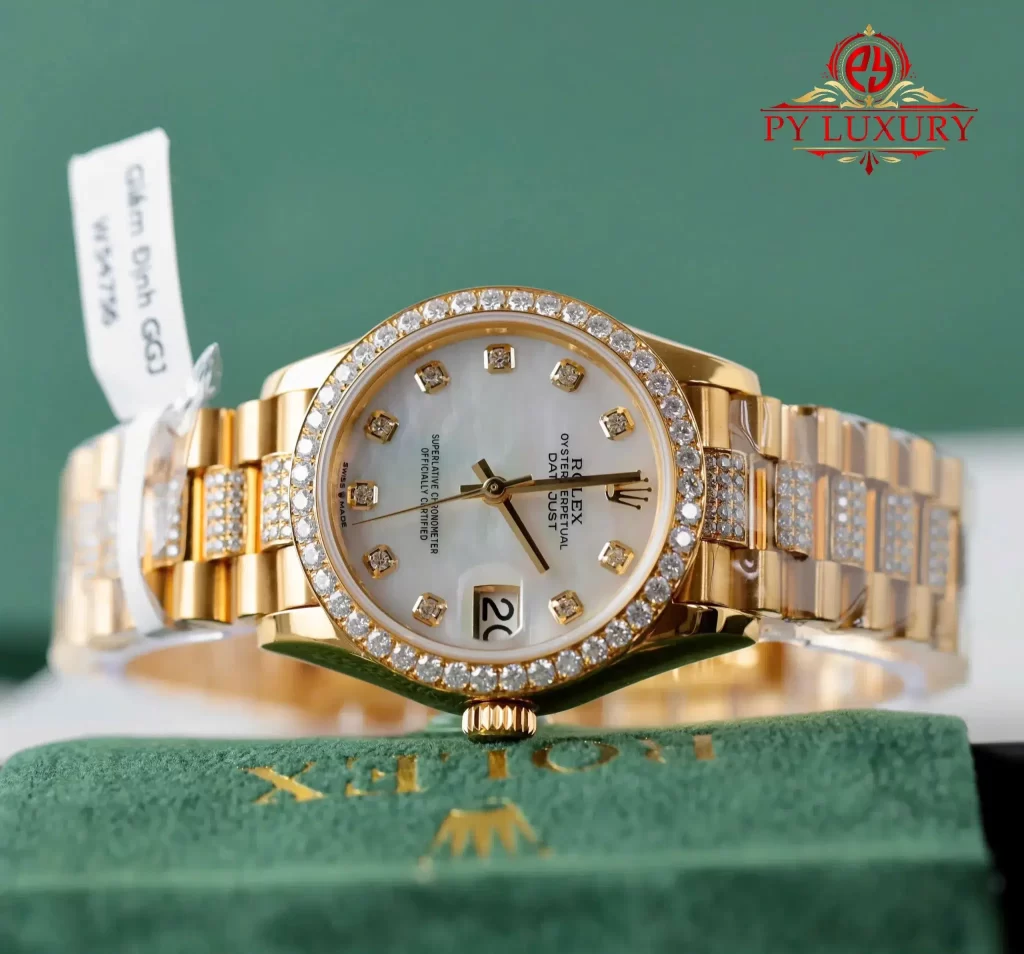
For those who favor a brighter aesthetic, Rolex introduces a white mother-of-pearl dial in a white gold Day-Date 40. The iridescent surface shifts subtly with light, while ten baguette-cut diamonds serve as hour markers, adding a touch of brilliance. This version is a bold yet tasteful statement, ideal for collectors who seek both opulence and horological excellence.
The Day-Date has always been Rolex’s flagship model for discerning connoisseurs, and these new dial variations reinforce its status as a canvas for artistic expression. By introducing the ombré effect to the clone Rolex Day-Date 40, Rolex ensures that even the most traditional watch can feel fresh and contemporary. The mother-of-pearl and diamond option, meanwhile, caters to those who desire a bolder, more glamorous aesthetic.
With these updates, Rolex proves once again that the Day-Date is more than just a watch – it’s a statement of achievement and refinement. The slate grey ombré offers a modern twist on a classic, while the mother-of-pearl and diamond version delivers pure luxury.
As the watch world converges on Geneva’s Palexpo each spring, one name eclipses all others: Rolex. The crown-brand’s annual unveiling at Watches market ignites fervent speculation, blending cold logic with hopeful fantasy. While the brand’s notoriously secretive approach leaves little room for certainty, the thrill lies in imagining how Rolex might redefine horology’s boundaries. Below, we explore five tantalizing possibilities for 2025 – a blend of strategic forecasting and unabashed wishful thinking.
The Submariner’s Golden Reckoning For a legend born in 1953, the Submariner’s current lineup feels surprisingly restrained. Eight variants span stainless steel, two-tone Rolesor, and precious metals, yet the no-date model remains shackled to a single Oystersteel iteration. Collectors have long clamored for expansion, but Rolex rarely indulges predictable moves. Instead of a steel sibling, envision a decadent twist: a yellow gold no-date Submariner. Stripped of its date window and cyclops lens, this opulent diver would marry minimalist functionality with unabashed luxury – a siren song for purists and maximalists alike. The absence of complications would heighten its tool-watch authenticity, while the warm luster of gold transforms it into a statement piece. Rolex thrives on such paradoxes, and this model could epitomize their mastery of duality.
Titanium’s Time to Shine RLX Titanium, Rolex’s proprietary alloy, has lingered in the shadows since debuting on niche models like the unwieldy Deepsea Challenge. To elevate this space-age material, the Explorer II emerges as an ideal canvas. Currently offered in monochromatic steel, the Explorer II’s rugged charm – born for spelunking adventures – begs for a modern edge. A titanium overhaul would slash weight while amplifying durability, its matte-gray hue evoking industrial sophistication. Imagine slate-colored dials replacing the current orange accents, harmonizing with titanium’s muted sheen. Such a release could reignite interest in Rolex’s overlooked tool watches, positioning the Explorer II as a stealthy, everyday companion for the urban explorer.
The GMT-Master II’s Forbidden Elixir Rolex aficionados still mourn the absence of a “Coke” bezel – a red-and-black icon last seen in the 1980s. With 2024 marking the GMT-Master’s 70th anniversary, the stars may align for its triumphant return. But true to form, Rolex would likely pair nostalgia with exclusivity: a white gold case and the debut of an Oysterflex bracelet. This rubber-and-metal hybrid, currently absent from GMT models, offers sporty elegance perfect for globetrotters. While stainless steel remains the people’s choice, Rolex adores subverting expectations – transforming a fan-favorite design into a high-end trophy piece. The result? A jet-setter’s grail that blends vintage DNA with contemporary swagger.
The Milgauss Reborn: Science Meets Sculpture Discontinued in 2023, the Milgauss left a void in Rolex’s scientific legacy. Its revival demands more than nostalgia; it requires reinvention. Modern rivals like Omega’s METAS-certified watches now withstand 15,000 gauss – far beyond the Milgauss’s 1,000-gauss pedigree. A 2025 resurgence must marry brute-force antimagnetism with avant-garde design. Enter the integrated bracelet: a feature absent from Rolex since the Oysterquartz era. Drawing inspiration from icons like IWC’s Ingenieur, a streamlined, bracelet-case fusion could redefine the Milgauss as both tool and jewel. Pair this with a tripled antimagnetic rating, and Rolex reclaims its mantle as the laboratory’s ultimate companion.
The Polar Explorer: A Study in Simplicity Sometimes, less is more – except at Rolex. Despite fervent petitions, the Explorer I clings stubbornly to black dials, while its sibling, the Explorer II, offers monochrome versatility. A white “Polar” Explorer seems inevitable: a clean, legible field watch for sun-drenched landscapes. Yet its absence speaks to Rolex’s contrarian soul. The brand resists easy wins, favoring calculated scarcity over crowd-pleasing gestures. Should they relent, a Polar Explorer would be horology’s ultimate sleeper hit – proof that even giants can embrace simplicity.
Rolex’s genius lies in balancing heritage with unpredictability. While these predictions orbit collector fantasies, history teaches us to expect the unexpected. Whether through material innovation, nostalgic revival, or minimalist refinement, 2025’s releases will undoubtedly spark debates, desires, and perhaps a few delightful shocks.
The horological world buzzes with anticipation this week as two controversial watches step into the arena: Rolex’s freshly unveiled Land-Dweller 127336 and Patek Philippe’s polarizing Cubitus 7128/1G. Both debuted at Watches and Wonders under starkly different receptions – the Land-Dweller arriving as a retro-modern homage to fake Rolex’s Oysterquartz lineage, while the Cubitus emerged as Patek’s contentious answer to downsizing trends. In this platinum-versus-white-gold duel, horology enthusiasts face an intriguing dilemma: Does tradition triumph over reinvention, or does audacity outweigh heritage?
A Tale of Two Philosophies Rolex’s Land-Dweller arrives with a bold proposition. Its angular 40mm platinum case, measuring a svelte 9.7mm thick, resurrects the geometric austerity of the 1970s Oysterquartz – a design language Rolex enthusiasts have longed to see revived. The ice-blue dial, a signature of Rolex’s platinum models, courts both admiration and critique. Honeycomb texturing nods to vintage aesthetics, yet the oversized open numerals at 6 and 9 o’clock clash with the brand’s typically restrained ethos. While the dial’s divisive layout may deter purists, the flat Jubilee bracelet – a masterclass in ergonomics with its hidden butterfly clasp – hints at untapped potential.
Beneath its polarizing exterior lies horological innovation: the new Caliber 7135. This high-beat movement (36,000vph) marries silicon hairsprings with replica Rolex’s proprietary Dynapulse escapement, achieving a chronometer-certified accuracy of ±2 seconds daily. The inclusion of a sapphire caseback – a rarity for Rolex – showcases a movement finished to mirror-like perfection, blending technical prowess with visual allure. Priced at €64,800, the Land-Dweller positions itself as a statement of technological ambition, albeit one begging for refined dial alternatives.
Patek Philippe’s Cubitus 7128/1G, meanwhile, enters the ring with quieter confidence. The 40mm white gold iteration, a direct response to criticism of its hulking 45mm predecessor, trims excess while retaining the model’s signature silhouette. At 8.5mm thick, it wears like a second skin, its dark blue sunburst dial exuding understated elegance. The redesigned bracelet – a symphony of brushed and polished links – rivals Rolex’s craftsmanship, offering liquid-like articulation. Yet the Caliber 26-330 S C/434, while impeccably finished, feels almost anachronistic: a 28,800vph workhorse with a modest 35-45-hour power reserve. Priced at €76,000, the Cubitus leans heavily on Patek’s heritage, though its derivative aesthetics – often likened to a diluted Nautilus – leave critics questioning its creative ambition.
The Heart of the Debate For Rolex, the Land-Dweller represents a daring pivot. Its angular case and experimental dial signal a willingness to reinterpret archives, while the Caliber 7135 underscores Rolex’s engineering dominance. Yet the design’s jarring elements – the clunky numerals, the busy honeycomb – betray a hesitation to fully commit to either vintage revival or avant-garde boldness. Enthusiasts speculate that future dial variants could elevate it to icon status, but for now, it remains a diamond in the rough.
Patek’s Cubitus, conversely, feels like a cautious retreat. The 40mm case corrects its predecessor’s proportions, yet the design lacks the Nautilus’s daring or the Aquanaut’s youthful verve. Its saving grace lies in wearability – the slim profile and versatile dial make it a discreet companion for both boardrooms and bistros. But at its price point, “discreet” risks blending into “forgettable,” particularly when compared to Rolex’s technical leaps.
Choosing between these two is less about flaws and more about priorities. The Land-Dweller, despite its missteps, thrills with innovation and nostalgia – a canvas awaiting refinement. The Cubitus, while elegant, struggles to justify its premium in a market hungry for originality. In this clash of horological titans, Rolex’s forward momentum edges out Patek’s tentative steps. Yet for collectors valuing pedigree over progress, the Cubitus’s whispered allure may still hold sway.
The tradition of wearing a watch on the left wrist is deeply ingrained in many cultures, but does that make it socially unusual to wear a Rolex – or any watch – on the right wrist? The answer is nuanced and depends on personal preference, practicality, and cultural norms.
The convention of wearing a watch on the left wrist dates back to the early 20th century when pocket watches transitioned to wristwatches. Since most people are right-handed, it made practical sense to wear a replica watch on the non-dominant wrist. This allowed for easier winding and adjustment with the dominant hand while minimizing wear and tear on the watch. Over time, this practice became the norm, and wearing a watch on the left wrist became a widely accepted tradition.
However, cultural norms are not universal. In some cultures or communities, there is no strict rule about which wrist to wear a watch on. Additionally, left-handed individuals often naturally gravitate toward wearing their watch on the right wrist for the same practical reasons that right-handed people wear theirs on the left. For them, it’s not unusual – it’s simply more comfortable and functional.
Wearing a Rolex on the right wrist can be a matter of practicality. For left-handed individuals, it makes sense to wear the watch on the right wrist to avoid interference with daily activities. Similarly, some right-handed people may find it more comfortable to wear their watch on the right wrist, especially if they have a specific reason, such as an injury or preference for symmetry.
Rolex itself acknowledges this flexibility. The brand offers watches with crown configurations that cater to left-handed wearers, such as the replica Rolex GMT-Master II designed specifically for the right wrist. This demonstrates that Rolex recognizes the diversity of its clientele and accommodates different preferences.
While wearing a Rolex on the right wrist may stand out in certain social settings, it is unlikely to be seen as socially unusual or inappropriate. In today’s world, personal style and individuality are celebrated, and how someone chooses to wear their watch is often viewed as a reflection of their personality. A Rolex is a statement piece regardless of which wrist it adorns, and its prestige and craftsmanship remain unchanged.
That said, in more traditional or formal settings, some people might notice and comment on the unconventional placement of the watch. However, such reactions are typically rooted in curiosity rather than judgment. Ultimately, the way you wear your Rolex is a personal choice, and confidence in that choice is what truly matters.